What Is Alert Overload in a Security Operations Center (SOC)?
Alert overload in a SOC refers to the overwhelming volume of security notifications generated by monitoring tools and detection systems. Every device, application, and endpoint can produce alerts, ranging from minor anomalies to critical threats. As organizations grow and add more security solutions, the number of alerts increases exponentially, making it difficult for SOC analysts to keep up.
SOC teams face significant pressure as they attempt to review, prioritize, and respond to this continuous stream of alerts. The constant influx often leads to important security incidents being buried among routine notifications. As a result, analysts may miss early warning signs of an attack or waste valuable time investigating harmless events.
AI-driven Security Operations Center (SOC) solutions are transforming alert management from a reactive, manual process into an automated, proactive system. These platforms combat alert fatigue by filtering out noise, correlating related events, and autonomously investigating incidents at machine speed.
This is part of a series of articles about SOC services
Consequences of Alert Fatigue
Missed Critical Threats
Alert fatigue often results in SOC analysts overlooking or ignoring high-priority threats. When overwhelmed by thousands of notifications daily, it becomes nearly impossible for analysts to review each alert thoroughly. As a result, genuine security incidents can slip through the cracks, giving attackers more time to exploit vulnerabilities and move laterally within the environment.
The repercussions of missing critical threats can be severe, including data breaches, ransomware infections, and financial losses. Attackers may gain unauthorized access to sensitive systems or exfiltrate confidential data without detection. Over time, the cumulative effect of missed threats erodes trust in the SOC’s ability to protect the organization.
Slower Response Times
A high volume of alerts forces SOC analysts to spend excessive time sifting through notifications, which slows their ability to respond to genuine incidents. When every alert demands attention, it becomes difficult to prioritize those requiring immediate action. Critical threats remain unaddressed while analysts are occupied with lower-risk or false-positive alerts.
Delayed response times can compound the impact of a security incident. The longer it takes to contain and remediate a threat, the greater the potential damage. Attackers may use this delay to escalate privileges, move laterally, or deploy additional payloads.
Analyst Burnout and Turnover
Persistent alert overload places SOC analysts under constant stress, leading to burnout. The repetitive nature of triaging endless notifications, combined with the fear of missing a critical threat, creates a high-pressure work environment. The mental and emotional toll can reduce job satisfaction and engagement, making it difficult for organizations to retain skilled security professionals.
High turnover among SOC analysts further worsens alert fatigue. When experienced staff leave, institutional knowledge is lost, and remaining team members face greater workloads. Recruiting and training new analysts is costly and time-consuming, leaving organizations vulnerable during transition periods.
How AI SOC Solutions Address Alert Overload
Intelligent Alert Prioritization
AI-driven SOC solutions use machine learning to assess and prioritize alerts based on risk, context, and historical patterns. By automatically correlating data from multiple sources, these systems assign severity scores and highlight alerts that are most likely to indicate real threats. This reduces the manual effort required to triage notifications and ensures that analysts focus on incidents that matter.
Prioritization algorithms learn from feedback and adapt to evolving threats and organizational environments. As a result, the system becomes more accurate over time, reducing the number of low-priority alerts that require analyst review. Intelligent prioritization enables SOC teams to allocate resources efficiently, improving detection rates and response times.
Automated Alert Triage
AI-powered platforms automate the initial triage process by analyzing alerts against known threat indicators and behavioral baselines. These systems dismiss routine or benign events and escalate only alerts that require human investigation. Automated triage decreases the volume of alerts requiring manual review, allowing analysts to concentrate on complex or novel threats.
By standardizing the triage process, AI reduces variability in alert handling and ensures consistent application of security policies. Automation frees analyst time for proactive threat hunting and incident response activities. As attack techniques evolve, automated triage systems can be updated with new detection rules and threat intelligence to maintain effectiveness.
False Positive Reduction
One of the main contributors to alert overload is the high rate of false positives generated by traditional security tools. AI SOC solutions address this by using analytics and context-aware algorithms to filter out noise. These systems consider factors such as user behavior, asset criticality, and threat intelligence to distinguish between benign anomalies and genuine threats, reducing unnecessary alerts.
Reducing false positives eases the burden on analysts and increases the likelihood that real threats receive timely attention. Over time, AI models learn from analyst feedback and refine detection capabilities, further minimizing false alarms. This improvement cycle helps SOC teams maintain focus on high-priority incidents.
Autonomous Investigation and Response
AI SOC solutions can conduct autonomous investigations by collecting and analyzing evidence from multiple sources to determine the scope and impact of an incident. These systems correlate events, identify attack patterns, and generate detailed incident reports so analysts can make decisions quickly. Autonomous investigation reduces manual workload and speeds up incident response.
In some cases, AI-driven platforms execute predefined response actions, such as isolating affected endpoints or blocking malicious traffic, without human intervention. Automated response helps contain threats before they spread and reduces potential damage.
Related content: Read our guide to SOC alerts
Notable AI SOC Solutions for Alert Overload Management
1. Radiant Security
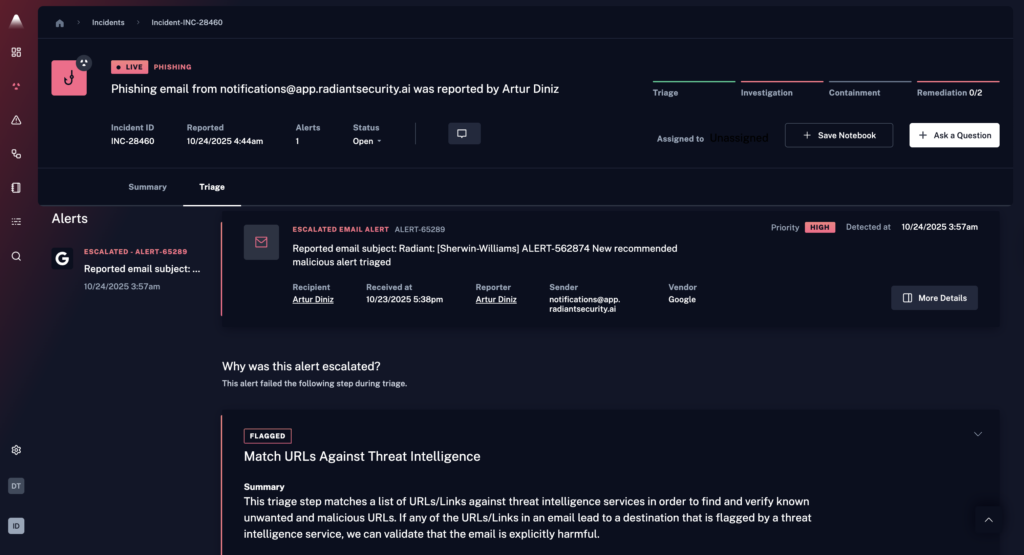
Radiant Security is an Agentic AI SOC platform that automates alert triage, investigation, and response across the security lifecycle. The platform is designed to reduce false positives by roughly 90%, enabling analysts to spend more time on verified threats rather than manual triage. Radiant also aims to shorten investigation and response times (MTTR) and lower operational costs, while helping teams avoid the fatigue that often comes with high alert volume.
Key capabilities include:
- Agentic AI triage and investigation for all alert types, including previously unseen or low-fidelity ones.
- Transparent reasoning that shows how and why the AI reached its conclusions, helping analysts validate decisions and build trust.
- Integrated response with one-click, executable action plans that can be carried out manually or automated when appropriate.
- Log management with unlimited retention, delivered at a cost significantly lower than traditional SIEM platforms.
- AI feedback loop that allows teams to influence and adjust triage behavior using environmental context, improving accuracy over time.
Radiant provides a unified environment for handling alerts, investigations, response actions, and log data, with an emphasis on efficiency, clarity, and analyst control.
2. Microsoft Security Copilot
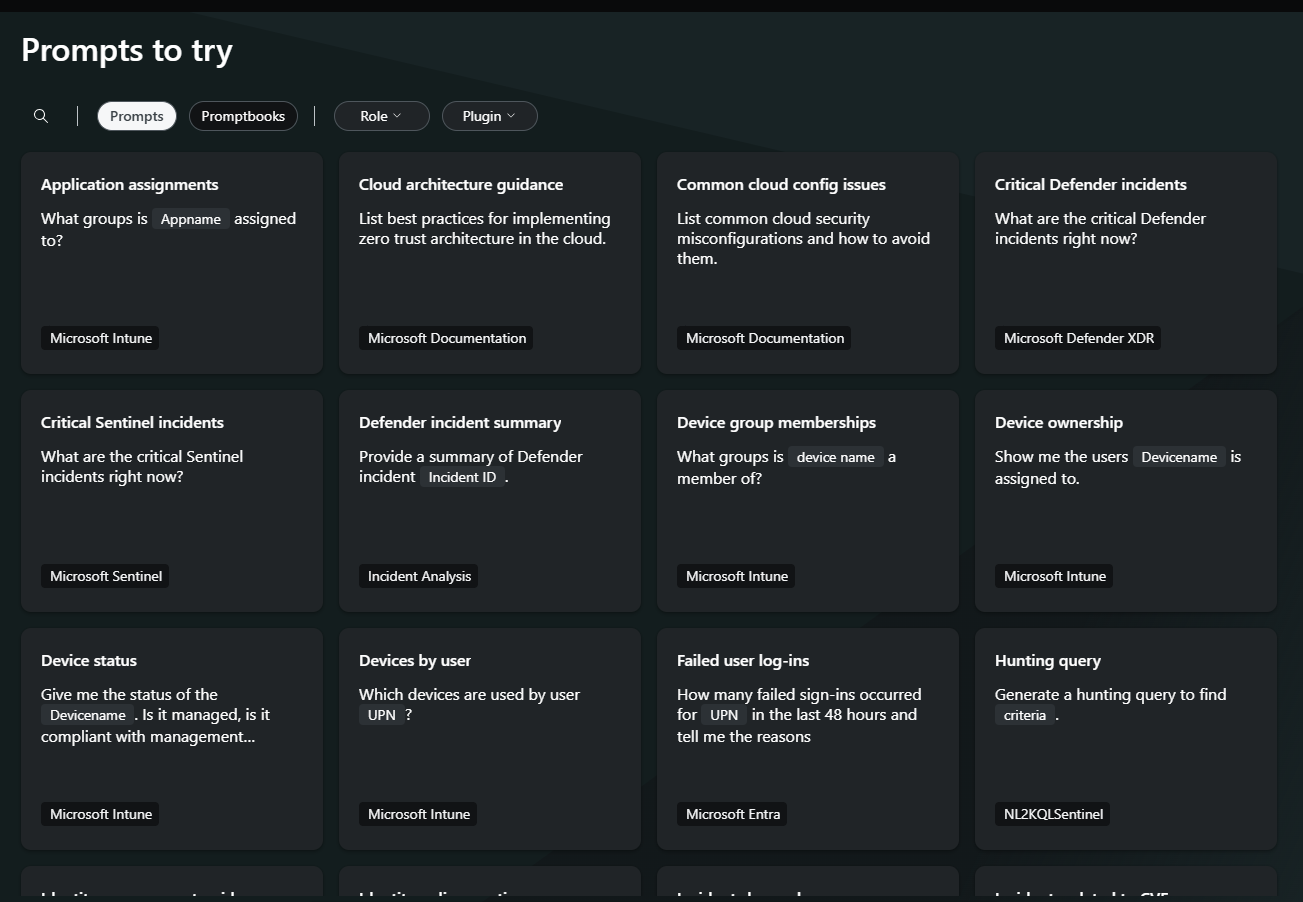
Microsoft Security Copilot is a generative AI-powered security solution that improves SOC efficiency by combining natural language interaction with integrations across security tools and data sources. It enables analysts to investigate incidents, analyze alerts, and respond to threats through conversational prompts, while automatically enriching responses with organizational context, threat intelligence, and data from connected systems.
General features include:
- Natural language interaction: Allows analysts to interact with security systems using plain language instead of complex query syntax
- Broad SOC use case coverage: Supports incident response, threat hunting, intelligence analysis, posture management, and more
- Deep ecosystem integration: Connects with Microsoft Defender XDR, Sentinel, Intune, Entra, and third-party tools
- Plugin-based data access: Uses plugins to pull and correlate data from alerts, logs, incidents, policies, and external systems
- Context-aware intelligence: Combines organizational data with global threat intelligence to generate relevant outputs
Alert overload management features:
- Alert summarization: Converts complex alerts into concise summaries for triage
- Contextual correlation: Aggregates and correlates data from multiple sources to provide insight into alerts
- Risk prioritization: Highlights relevant and high-risk threats based on contextual and intelligence-driven analysis
- Natural language investigation: Allows analysts to investigate alerts through simple prompts
- Enhanced visibility: Combines telemetry and threat intelligence to clarify alert significance
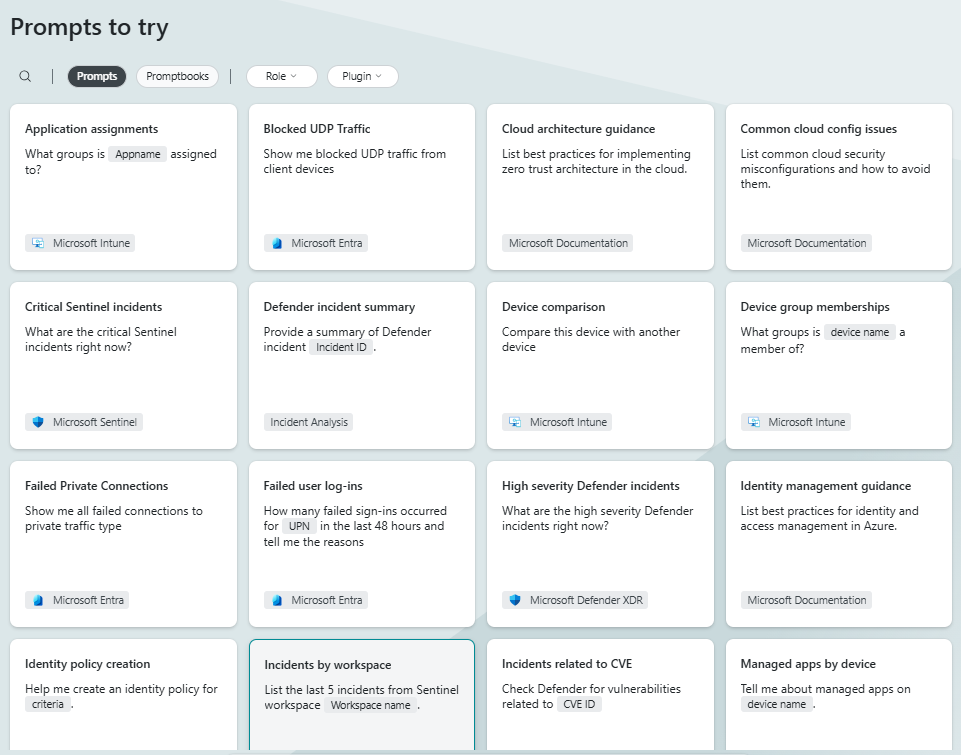
Source: Microsoft Security Copilot
3. Google SecOps
Google SecOps is a cloud-native, AI-powered security operations platform that unifies detection, investigation, and response within a single system. It uses Google-scale data processing, built-in threat intelligence, and generative AI to help security teams analyze large volumes of telemetry, identify high-priority threats, and act accurately.
General features include:
- Cloud-native architecture: Processes and analyzes large volumes of security data
- Integrated threat intelligence: Applies Google’s threat intelligence to detect emerging threats
- Curated detections: Provides a continuously updated set of prebuilt detections developed by threat researchers
- Custom detection authoring: Supports detection creation using Yara-L
- Generative AI with Gemini: Enables natural language interaction for searching data, creating detections, and assisting investigations
Alert overload management features:
- Prebuilt threat detections: Uses curated and maintained detection rules
- AI-assisted alert analysis: Uses Gemini to analyze alerts and generate summaries
- Natural language querying: Allows analysts to explore alerts and data without complex queries
- Contextual alert correlation: Connects related entities and events to provide alert context
- High-speed data search: Enables rapid investigation across large datasets
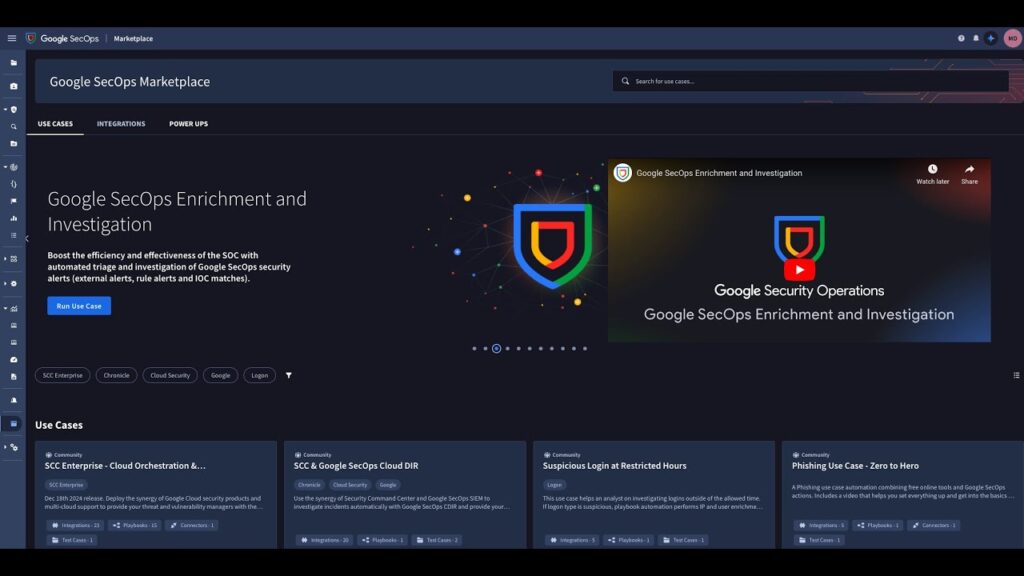
Source: Google SecOps
4. CrowdStrike Charlotte AI
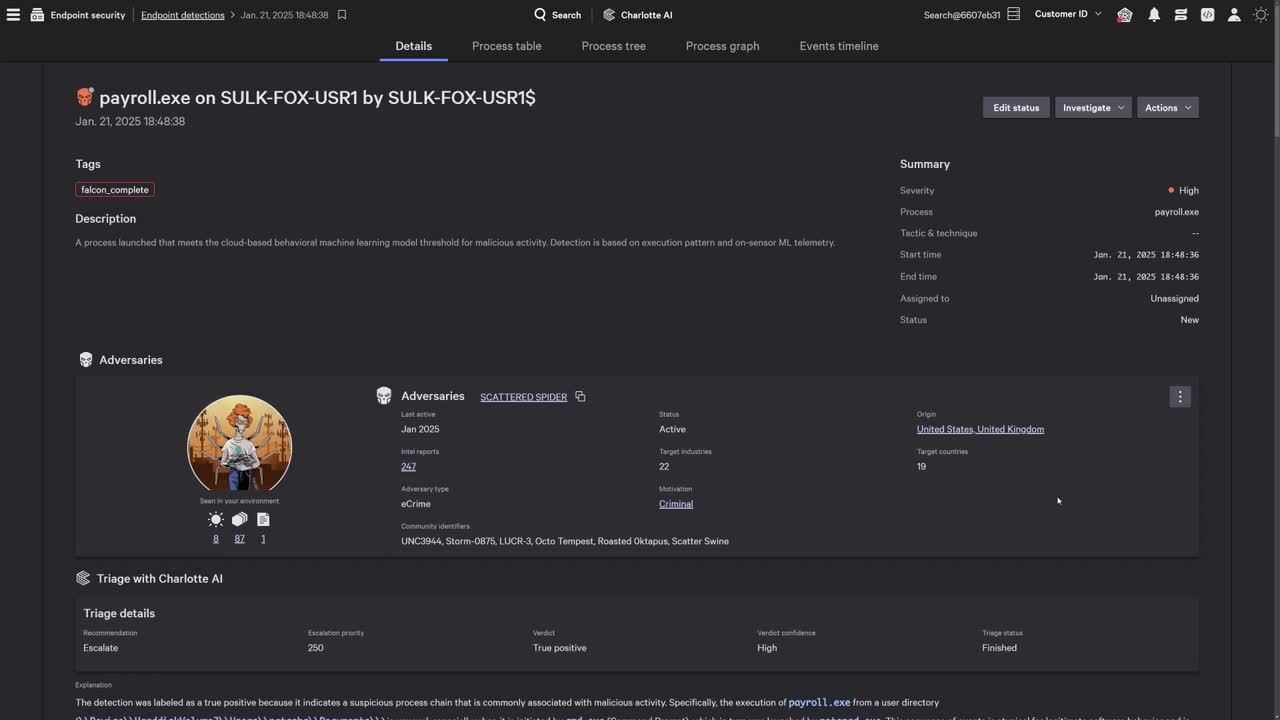
CrowdStrike Charlotte AI is an AI-driven security solution built to support an agentic SOC by combining autonomous AI reasoning with human expertise. It accelerates detection, investigation, and response by automating repetitive tasks, surfacing insights, and enabling collaboration between analysts and AI agents.
General features include:
- Agentic AI architecture: Combines autonomous AI agents with human input to support decision-making and execution across security workflows
- Automated task execution: Offloads repetitive tasks to prebuilt or custom AI agents
- Accelerated decision-making: Surfaces insights and context to support analyst decisions
- Human-AI collaboration: Enables analysts to guide investigations in real time by adding context and setting priorities
- AgentWorks ecosystem: Allows teams to build, test, deploy, and manage custom security agents using natural language
Alert overload management features:
- Automated alert triage: Uses AI models to triage detections, reducing the volume of alerts requiring human review
- False positive reduction: Filters out irrelevant alerts and surfaces high-priority threats based on learned patterns
- Insight prioritization: Highlights critical alerts with context
- Investigation acceleration: Combines AI reasoning with analyst input to analyze alerts
- Time savings through automation: Reduces manual triage and investigation effort
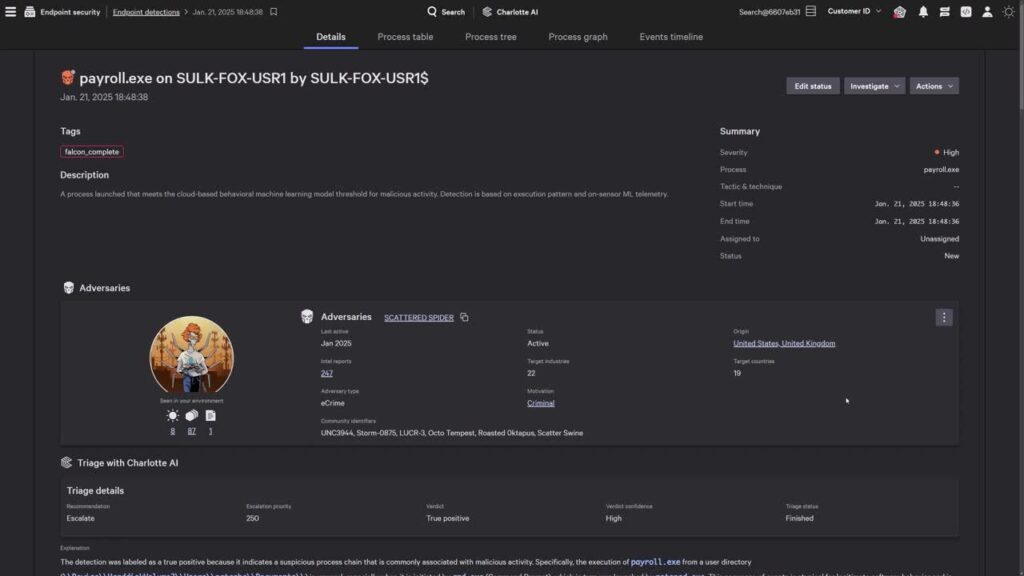
Source: CrowdStrike
5. SentinelOne AI SIEM
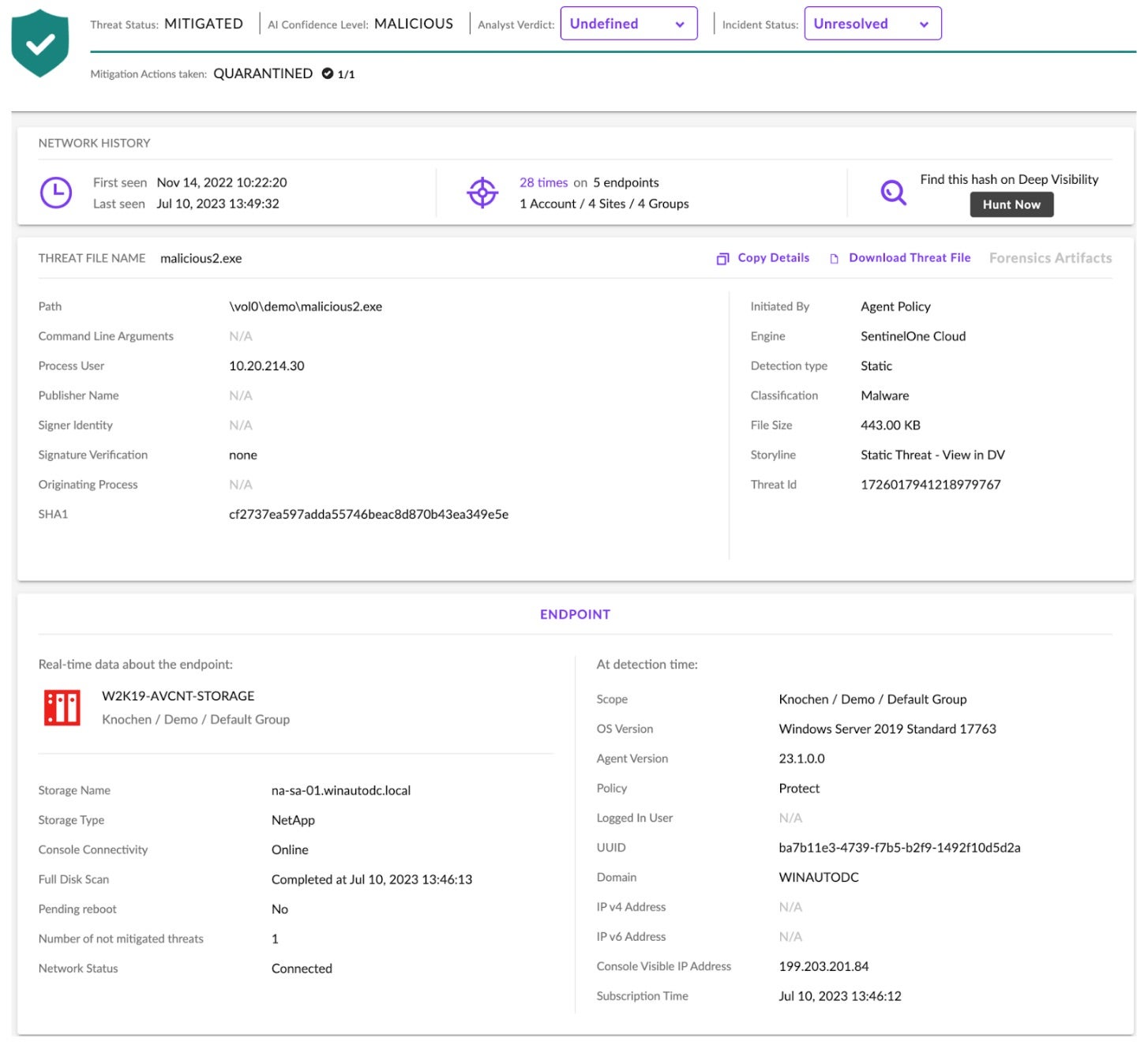
SentinelOne AI SIEM is an AI-powered, cloud-scale security analytics platform built on the Singularity Data Lake that supports autonomous SOC operations. It provides real-time detection, investigation, and response across security domains by combining high-speed data ingestion, analytics, and automation.
General features include:
- AI-powered detection and analytics: Uses AI algorithms to identify threats and anomalies across datasets
- Singularity Data Lake foundation: Centralizes security data in a scalable platform for unified analysis and storage
- Real-time data processing: Streams and analyzes data in real time
- Unified security coverage: Supports endpoint, cloud, network, identity, and email security within a single platform
- High-performance architecture: Operates without schema or indexing constraints
Alert overload management features:
- AI-driven alert detection: Identifies relevant threats by analyzing large volumes of data
- False positive reduction: Uses AI models to distinguish real threats from benign anomalies
- Real-time alert processing: Analyzes streaming data to surface high-priority alerts
- Unified alert visibility: Consolidates alerts across domains into a single platform
- Automated investigation workflows: Automates analysis and correlates related events
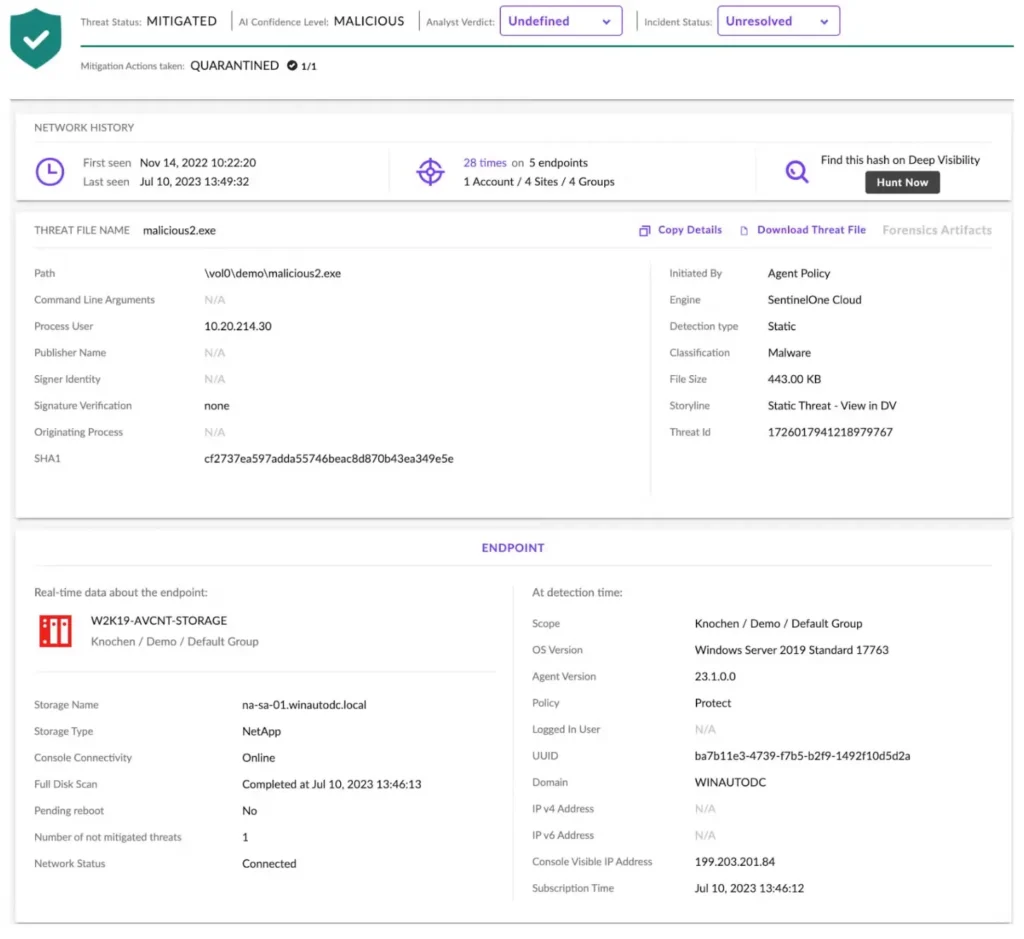
Source: SentinelOne
Conclusion
Alert overload is a structural challenge in modern SOC environments, driven by growing data volumes and fragmented detection systems. AI SOC solutions address this by reducing noise, automating triage and investigation, and prioritizing high-risk threats. By shifting from manual processing to intelligent automation, organizations can improve detection accuracy, accelerate response times, and maintain sustainable security operations at scale.